

Fast Reply: A transportable photo voltaic generator can preserve a window or mini‑cut up air conditioner operating for hours throughout an outage—but it surely’s not a substitute for each day entire‑residence cooling. The secret’s matching your AC’s wattage and surge necessities to the unit’s output and battery. For many in 2026, a hybrid technique—grid energy for on a regular basis cooling, moveable photo voltaic backup for emergencies—provides extra flexibility at a decrease price than a devoted photo voltaic AC.
- The New Actuality: Why Photo voltaic Air Conditioning Choices Have Modified in 2026
- What Does It Take to Run a Window or Mini‑Cut up AC on Photo voltaic Energy?
- Limitations / What to Know Earlier than: The Most Widespread Sizing Errors That Go away You With out Cooling
- Actual‑World Recommendation from Skilled Off‑Grid Customers
- When a Transportable Photo voltaic Generator Beats a Entire‑House Photo voltaic System (and When It Would not)
- Methods to Match a Backup System to Your Precise Cooling Wants
- Powering a Transportable AC Via a Blackout: Three Scalable Choices
- Incessantly Requested Questions (FAQ)
Key Takeaways
- A 5,000 BTU window AC wants 450–600 operating watts however can surge to 1,200–1,800 W at startup, so your moveable station should deal with that spike.
- Operating an AC for 8 hours in a single day calls for 3.6–9.6 kWh of usable battery capability, relying on the unit measurement.
- Ignoring compressor startup surge is the #1 mistake that causes moveable methods to journey or shut down throughout a heatwave.
- Transportable photo voltaic mills remove set up prices, allowing, and HOA complications—and you may take them with you should you transfer.
- For cooling a single room throughout an outage, a 2,000+ Wh station with a 4,400 W surge peak can preserve a window unit, fridge, and lights operating for hours.
The New Actuality: Why Photo voltaic Air Conditioning Choices Have Modified in 2026
A devoted photo voltaic AC setup—panels, inverter, battery, and set up—now prices $2,000 to $7,000 upfront, with payback durations stretching to six–10 years even in sunny areas, making it arduous to justify for non‑vital consolation. In the meantime, peak cooling demand coincides with heatwaves that may set off blackouts.
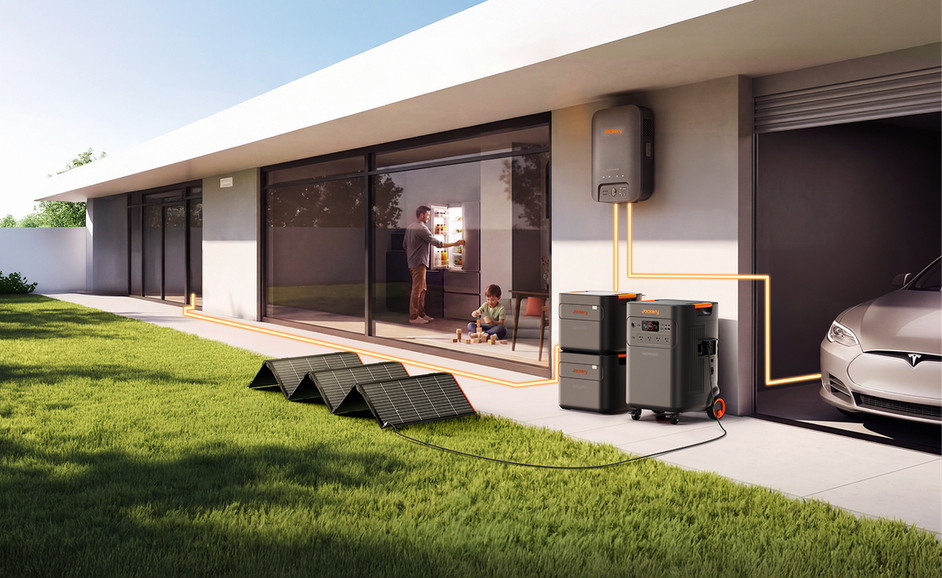
The benefits of a conveyable method are clear:
- Skip contractor charges, permits, and structural set up
- Take the system with you should you transfer
- Perfect for renters, condo dwellers, or anybody wanting emergency cooling with out a everlasting dedication
- Extra rapid resilience than a rooftop system for operating a window AC throughout an outage
The “peak warmth failure hole” stays a problem: photo voltaic panels produce essentially the most energy round noon, however cooling demand spikes from 4–7 PM when output is already falling. Any photo voltaic‑powered cooling resolution wants a considerable battery financial institution, and important residence backup methods allow you to proper‑measurement that storage with out over‑investing in a 12 months‑spherical array.
What Does It Take to Run a Window or Mini‑Cut up AC on Photo voltaic Energy?
Operating an AC on photo voltaic requires sufficient panel wattage, a battery for evening use, and an inverter that handles startup surge. Listed here are the important thing specs:
|
AC Unit Sort |
Operating Watts |
Startup Surge |
Nightly Utilization (8h) |
Required Panels (Daylight Solely) |
|---|---|---|---|---|
|
5,000 BTU window AC |
450–600 W |
1,200–1,800 W |
4.8 kWh |
A minimum of 2× 400 W panels |
|
9,000–12,000 BTU mini‑cut up |
900–1,200 W |
2,500–2,700 W |
7.2–9.6 kWh |
≥3× 400 W panels |
A single 400 W photo voltaic panel within the US produces roughly 1.6–1.8 kWh per day; you’d want at the least two such panels to run a small window unit throughout daylight. For nighttime operation, use this system:
(Operating Watts × Hours Used) ÷ 1,000 = Each day kWh
Instance: a 600 W window unit for 8 hours makes use of 4.8 kWh. With 10–15% inverter losses, you want about 5.5 kWh of saved power.
Battery capability for 8 hours of nighttime AC ranges from 3.6 kWh for a small window unit to 9.6 kWh for a mini‑cut up, which may improve whole system price by about 40% if shopping for additional batteries. LiFePO4 batteries ship 3,000–5,000 cycles (10–15 years of each day use) and deal with excessive steady discharge with out sag.
Vital necessities:
- A pure sine wave inverter is non‑negotiable—modified sine wave models usually fail with compressor surges
- Operating AC immediately from photo voltaic with out batteries works solely throughout 6–8 sunny noon hours; any cloud or sundown cuts cooling
Limitations / What to Know Earlier than: The Most Widespread Sizing Errors That Go away You With out Cooling
1. Ignoring startup surge energy: A 900 W mini‑cut up can spike to 2,700 W for 3–5 seconds. Test the AC’s nameplate for LRA/startup wattage and confirm the station’s peak surge score; in any other case it should journey.
2. Underestimating each day power use: Throughout a heatwave, an AC could run 10–16 hours. A 500 W window unit can eat 5–8 kWh each day. Construct in a 25% buffer over your worst‑case estimate.
3. Forgetting inverter effectivity losses: Inverters lose 10–15% of power as warmth. A load requiring 2,000 Wh of usable output truly wants 2,300–2,400 Wh saved capability; neglecting this shortens battery life.
4. Counting on photo voltaic alone for night cooling: Peak photo voltaic manufacturing ends 3–4 hours earlier than peak cooling demand. With no battery, cooling stops after sundown.
5. Operating a fridge and AC on one small generator: Mixed surge can exceed 3,500 W. Use a generator with at the least 3,500 W surge and 4 kWh+ battery, and stagger startups (AC first, then fridge).
6. Complicated amps and watts: 10 A from a 12 V panel is just 120 W, not 1,200 W. All the time multiply amps by voltage to get watts.
7. Trusting inflated BTU scores: Many 12,000 BTU mini‑splits wrestle in actual 95°F+ circumstances. Select inverter‑pushed modulating fashions for higher excessive‑warmth effectivity.
Actual‑World Recommendation from Skilled Off‑Grid Customers
- Passive cooling first: Set up shutters, overhangs, or shade timber to chop cooling load as much as 30%, decreasing battery and panel necessities.
- Mushy‑begin kits ($75–$150): Scale back compressor startup surge by 50–70%, permitting a smaller inverter to run a ten,000 BTU unit on a 2,700 W surge station.
- MPPT cost controllers are necessary: Extract as much as 30% extra energy in partial shade or excessive warmth in comparison with PWM controllers.
- Hybrid mini‑splits with constructed‑in MPPT: Settle for direct DC photo voltaic enter, bypassing inverter losses; nonetheless want a battery for evening use.
- Keep away from 12 V/24 V DC RV models for residential use: 5,000–8,000 BTU fashions fail to chill successfully above 90°F—they’re designed for gentle climates.
- Programmable thermostats: Set the next “on” temperature throughout peak photo voltaic to financial institution power, then pre‑cool earlier than sundown so the battery solely maintains.
- Swamp coolers use 400–800 W vs. 1,000+ W for AC: Solely efficient in dry climates with humidity under 50%.
When a Transportable Photo voltaic Generator Beats a Entire‑House Photo voltaic System (and When It Would not)
Transportable methods win for:
- Renters and condo dwellers
- Emergency backup throughout blackouts—a generator with 2,000+ Wh capability and three,000 W surge can energy a window AC, fridge, and lights for a number of hours
Entire‑residence rooftop photo voltaic:
- Offsets 12 months‑spherical electrical hundreds
- Full set up can price upwards of $20,000 with a payback stretching properly past a decade
- Sizing a complete‑home generator entails a a lot bigger funding and everlasting dedication
The hybrid method—utilizing a conveyable backup for AC emergencies and the grid for each day use—is commonly cheaper and extra versatile than a devoted photo voltaic AC system in 2026. You keep away from a battery financial institution that sits idle 90% of the 12 months, and the moveable unit can be utilized for tenting or different outages.
RV and cellular limitations: Even with massive rooftop arrays, restricted area and poor insulation imply an RV can not keep cool for various hours off photo voltaic alone. A transportable station can complement, however do not count on all‑day AC in a cellular setup.
Methods to Match a Backup System to Your Precise Cooling Wants
Comply with these steps to keep away from shopping for a station that is too small or wildly outsized:
- Listing the AC’s operating and startup watts from the nameplate or guide. Startup surge is usually 2–3× operating watts for compressor‑based mostly models.
- Calculate each day watt‑hours: multiply operating watts by anticipated outage runtime. (600 W × 10 hours = 6,000 Wh).
- Add a 15–25% buffer for inverter losses and battery well being. 6,000 Wh turns into 6,900–7,500 Wh of usable capability wanted.
- Confirm surge output exceeds the AC’s startup surge. A 7,200 W surge score can deal with most 12,000 BTU mini‑splits.
- Resolve if enlargement is required. Some moveable stations allow you to daisy‑chain additional battery packs to cowl multi‑day blackouts.
For a fast reference, this is how completely different hundreds match up:
|
Cooling State of affairs |
Operating Watts |
Startup Surge |
Advisable Battery (8h) |
Recommended Photo voltaic Enter |
|---|---|---|---|---|
|
5,000 BTU window AC |
450–600 W |
1,200–1,800 W |
3.6–4.8 kWh |
500 W panels |
|
8,000 BTU window AC |
700–900 W |
2,100–2,700 W |
5.6–7.2 kWh |
800 W panels |
|
9,000–12,000 BTU mini‑cut up |
900–1,200 W |
2,500–2,700 W |
7.2–9.6 kWh |
1,200 W panels |
|
Transportable AC (twin‑hose, 12,000 BTU) |
1,200–1,500 W |
2,400–3,000 W |
9.6–12 kWh |
1,600 W panels |
For a 1,000–1,500 W moveable AC, you will want at the least 1,600–2,000 W of photo voltaic simply to run it throughout peak solar hours, plus a strong battery buffer for night. For full‑day residential use, consultants estimate 4,500 W of panels and 12 kWh of storage.
Powering a Transportable AC Via a Blackout: Three Scalable Choices
When the grid fails throughout a heatwave, a conveyable photo voltaic generator can preserve a single room livable. These three setups scale from fundamental window‑unit backup to prolonged mini‑cut up operation.
Jackery Photo voltaic Generator 2000 v2: Compact unit sustains a 5,000–8,000 BTU window AC for ~2 hours and runs a fridge and lights.
Jackery Photo voltaic Generator HomePower 3600 Plus + SolarSaga 500X: Mid‑vary system runs a 12,000 BTU mini‑cut up for over 3 hours (expandable to 21.48 kWh with additional battery packs); the five hundred W bifacial panel recharges it in about 16 hours of solar.
Jackery Photo voltaic Generator 5000 Plus + 2x SolarSaga 500X: Heavy‑responsibility base of 5,040 Wh (expandable to 60 kWh) offers a number of hours of backup cooling for a big mini‑cut up or central AC air handler, with a 6.5‑hour photo voltaic recharge utilizing the 2 included panels.
|
Use Case |
Advisable System |
Key Specs |
What It Can Run |
|---|---|---|---|
|
Brief outage, small window AC |
Jackery Photo voltaic Generator 2000 v2 |
2,042 Wh LiFePO4, 2,200 W steady / 4,400 W surge |
5,000–8,000 BTU window AC, fridge, lights for ~2h |
|
Night mini‑cut up cooling, expandable |
Jackery Photo voltaic Generator HomePower 3600 Plus + SolarSaga 500X |
3,584 Wh (expandable to 21.48 kWh), 3,600 W / 7,200 W surge |
12,000 BTU mini‑cut up for 3+ hours, extendable |
|
Prolonged backup for giant AC |
Jackery Photo voltaic Generator 5000 Plus + 2x SolarSaga 500X |
5,040 Wh (expandable to 60 kWh), 7,200 W / 14,400 W surge |
Giant mini‑cut up or central AC air handler for a number of hours (expandable) |
As coated earlier, the LiFePO4 batteries and pure sine wave inverters in all three fashions deal with compressor surges reliably. The principle variations lie in capability and expandability.
Can a Jackery energy an air conditioner? Sure, however the correct mannequin relies upon solely in your AC’s wattage and the way lengthy you want it to run. For detailed runtime estimates, verify how lengthy a Jackery will run an air conditioner. And should you’re new to pairing photo voltaic mills with cooling hundreds, the photo voltaic generator for AC information walks by way of the vital specs.
Incessantly Requested Questions (FAQ)
Can a conveyable air conditioner with an exhaust hose run on photo voltaic?
Sure, however twin‑hose models are extra environment friendly. A 12,000 BTU moveable AC consumes 1,200–1,500 W and wishes a photo voltaic generator with at the least 3,000 W surge.
Can I take advantage of my current residence photo voltaic panels to cost a conveyable generator?
Sure, if the panels have commonplace MC4 connectors and the generator’s enter voltage vary matches. You might must disconnect from the grid inverter first.
How can I run each an AC and fridge on one photo voltaic generator?
Use a generator with at the least 3,500 W surge and 4 kWh+ of battery. Stagger startup instances—energy the AC first, then the fridge—to keep away from simultaneous inrush.
What number of years will a LiFePO4 battery final powering AC nightly?
About 8–14 years if cycled each day, relying on depth of discharge and working temperature. 3,000–5,000 cycles at 80% depth is typical.
Do I would like a allow or HOA approval for a conveyable photo voltaic generator?
No permits are required for moveable models. Test HOA guidelines relating to seen panels, storage location, or noise restrictions, however most don’t have any points with short-term setups.