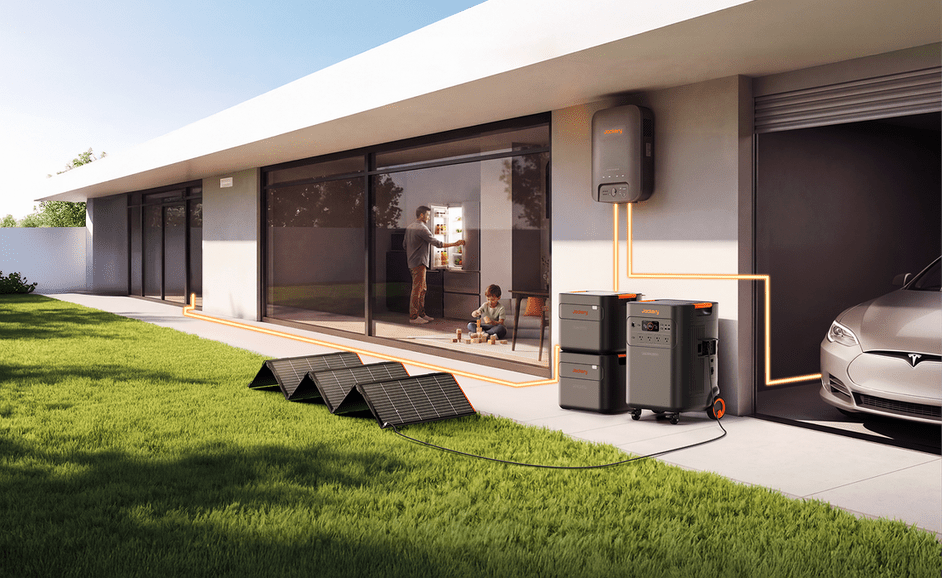


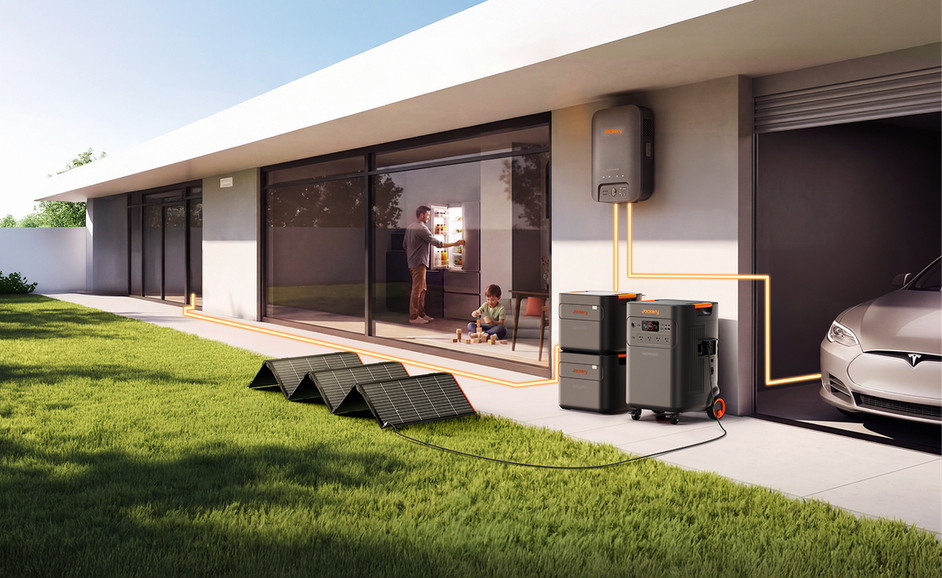
Fast Reply: A 400W foldable photo voltaic panel with a 2,000+ watt-hour energy station can run a fridge, lights, and telephones throughout an outage, delivering roughly 1,600 watt-hours every day. Actual-world output is 85–93% of the ranking, and open-circuit voltage can spike previous your station’s restrict in chilly climate. Match voltage fastidiously, account for losses, and also you’ll have silent, fuel-free backup.
- Why 400W Foldable Panels Are the Candy Spot for Grid-Down Eventualities
- Actual-World Wattage: What You Truly Get from a 400W Rated Panel
- Voltage Matching: Why You Can’t Simply Plug Any Panel Into Any Energy Station
- Sizing Your Emergency Backup: Panel, Battery, and Load Matching
- Widespread Errors When Pairing 400W Panels with Energy Stations
- Product Suggestions: Matching 400W Efficiency with Jackery’s Modular Ecosystem
- Incessantly Requested Questions
Key Takeaways
- A 400W panel realistically outputs 320–370W below optimum solar; apply a 0.8 derating issue for every day power estimates.
- Open-circuit voltage (Voc) rises as temperature drops — a 48V Voc panel can hit 52V, so at all times go away a minimum of 10% headroom beneath your energy station’s most enter.
- Every day manufacturing in 5 peak solar hours: roughly 1,600 Wh, sufficient to cowl a fridge (1,200 Wh) plus LED lights and system charging.
- Two 200W panels typically beat a single 400W: decrease voltage per panel provides security margin, helps you to angle panels in several instructions, and halves the load per carry.
- Extension cables—use solely these really useful on your panel and energy station mixture to keep away from energy loss over distance.
Why 400W Foldable Panels Are the Candy Spot for Grid-Down Eventualities
A 400W panel simply covers a typical 230W steady load (fridge, lights, units) with headroom for clouds. Sizing: every day Wh want ÷ 4 peak solar hours × 1.3 buffer = minimal array. For 1,000 Wh, that’s 325W — a 400W panel supplies comfy margin.
- Weight & transport: A typical 400W foldable weighs 35–36 lbs and wishes a car; not backpack-friendly.
- Charging pace: Roughly 50% quicker than a single 200W mannequin.
- Deployment: Solo setup on a windy day is awkward.
- Sturdiness: Hinges are the weak level — even IP68-rated, ETFE-laminated panels can fail on the folds after a whole lot of cycles.
- Greatest use: Stationary emergency package within the storage — silent, fuel-free energy. When the grid is down for days, photo voltaic panels maintain producing so long as daylight hits them — no fuel cans, no noise, no exhaust.
Actual-World Wattage: What You Truly Get from a 400W Rated Panel
No 400W panel produces 400W in the true world. Below perfect situations — full solar, 25°C cell temperature, excellent tilt — you’ll see 340–370W, about 85–93% of the STC ranking. Apply a 0.8 derating issue and count on roughly 320W at noon. That’s the quantity to make use of for sizing.
Peak solar hours range by location:
|
Area |
Peak Solar Hours (common) |
|
Southwest |
4–6 hours |
|
Midwest |
3–4 hours |
|
Pacific Northwest (winter) |
2.5–3.5 hours |
Every day yield = rated wattage × derating × peak solar hours
With 5 PSH and a 0.8 issue: 400W × 0.8 × 5 = 1,600 Wh. That’s sufficient to run a typical fridge (1,200 Wh/day) plus cost a cellphone and laptop computer. Fridges range extensively in consumption, so test your unit’s kill-a-watt studying fairly than counting on nameplate numbers.
- Warmth loss: Monocrystalline panels lose 0.35–0.4% per °C above 25°C. On a 40°C day, a 400W panel drops about 21W — roughly 5% of rated output.
- Partial shade: With out bypass diodes (uncommon in foldables), a single shadow throughout a small part can halve all the panel’s output. Preserve the panel absolutely unshaded from dawn to mid-afternoon.
Voltage Matching: Why You Can’t Simply Plug Any Panel Into Any Energy Station
- Voc hazard: Many 400W foldable panels carry a 48V open-circuit voltage (Voc) — dangerously near, or over, the 40V enter cap frequent on smaller models.
- Station limits: A Jackery Explorer sometimes accepts 12–60V, however different manufacturers prime out at 40V. All the time test your station’s printed most.
- Chilly-weather spike: At 0°C, a 48V Voc panel rises to about 52V; go away a minimum of 10% headroom beneath the restrict.
- Connectors: Most 400W panels terminate with MC4, however Jackery stations use DC7909 or DC8020 barrel plugs. You’ll want a $15–24 adapter — confirm polarity (internal constructive) earlier than plugging in.
- Wattage limits: If the panel’s wattage exceeds the station’s max photo voltaic enter ranking, the MPPT controller could throttle or shut down.
- MPPT benefit: MPPT expertise, commonplace in trendy transportable stations, extracts 20–30% extra energy than PWM and handles high-voltage panels effectively.
A single 400W panel vs. two 200W panels isn’t nearly weight — it’s about voltage security:
|
Configuration |
Typical Voc per panel |
Security margin (40V station restrict) |
Portability |
|
1× 400W |
48V (as much as 52V chilly) |
Exceeds restrict on many models |
35–36 lbs, one carry |
|
2× 200W parallel |
24V every |
Properly inside 40V cap |
~18 lbs every, simpler to maneuver |
Two 200W panels allow you to angle one east and one west, capturing extra complete solar, and a single panel failure doesn’t kill your complete charging functionality.
Sizing Your Emergency Backup: Panel, Battery, and Load Matching
Pair a 400W panel with a minimum of 1,000 Wh of battery capability — 2,000+ Wh is healthier for cloudy-day reserves — to maintain necessities operating after sundown. In 4 good solar hours, the panel can refill a 1,000 Wh battery. The sizing components is easy.
(Operating Watts × Hours Used) ÷ 1,000 = Every day kWh
Instance: A 150W fridge operating 8 hours plus 20W in lights for five hours = (150×8 + 20×5)/1,000 = 1.3 kWh/day. A 400W panel in 4 PSH at 0.8 derating yields 1,280 Wh — simply barely sufficient. Including a 30% buffer pushes every day must 1,700 Wh, which calls for a bigger battery or a second panel.
Two 200W panels typically outperform a single 400W for emergency flexibility. They’re about 18 lbs every, making them manageable for one particular person, and orienting them in several instructions captures a wider every day solar window. Trendy energy stations have built-in MPPT, so no separate cost controller is required — simply join the panel with the right adapter.
For a whole emergency package, you want:
- Panels with the suitable adapter: guarantee compatibility along with your energy station’s enter.
- Photo voltaic extension cable: appropriate along with your panel’s connectors and rated for the present and distance.
- Energy station: a minimum of 2,000 Wh capability.
- Fuse or disconnect: for security.
Understanding what’s included within the field prevents last-minute scrambles for lacking adapters.
Widespread Errors When Pairing 400W Panels with Energy Stations
- Ignoring Voc voltage limits. The most costly error: plugging a 48V Voc panel right into a 40V-capped station. The MPPT circuits can fry immediately. Earlier than shopping for, affirm each Voc (particularly cold-adjusted) and the station’s printed enter vary.
- Skimping on extension cable high quality. Low-quality or inappropriately sized extension cables can silently erase your panel’s headroom. All the time choose cables particularly designed for photo voltaic and rated on your panel’s present and run size.
- Laying panels flat on the bottom. A flat panel yields 20–40% lower than one tilted to your latitude. The built-in kickstands on foldable panels assist, however you will need to modify the angle each 2–3 hours to trace the solar. Flat deployment turns a 400W panel right into a 250W performer.
- Skipping native peak-sun-hour analysis. Utilizing generic 5-hour assumptions in a 3‑PSH area overestimates every day yield by 40%. Verify NREL’s PVWatts instrument on your zip code earlier than sizing the battery.
- Assuming partial shade doesn’t matter. Foldable panels lack bypass diodes. A shadow from a tree department can minimize output by half or extra. The panel should be absolutely uncovered from mid-morning onward.
Product Suggestions: Matching 400W Efficiency with Jackery’s Modular Ecosystem
Jackery’s foldable panels and LiFePO4 energy stations are designed to work collectively with no separate cost controller. For a 400W-class emergency setup, two merchandise stand out.
Jackery SolarSaga 500X Photo voltaic Panel
Although rated at 500W, the Jackery SolarSaga 500X’s real-world output sits round 400W after derating — precisely the efficiency goal for this information. Its bifacial TOPCon cells seize gentle from either side, hitting 25% effectivity. IP68 means you don’t panic if rain hits throughout a protracted outage.
|
Function |
Specification |
Key Profit |
|
Peak energy |
500W (STC) |
~400W actual, suits backup sizing |
|
Cell kind |
Bifacial TOPCon monocrystalline |
25% effectivity, captures mirrored gentle |
|
Weatherproofing |
IP68 |
Resists rain, mud, -40°F to 185°F |
|
Output connector |
MC4 |
Use DC8020/DC7909 adapter for Jackery stations |
Jackery Explorer 2000 v2 Transportable Energy Station
The 2,042Wh Explorer 2000 v2 delivers 2,200W steady (4,400W surge), sufficient to begin and run a family fridge whereas retaining lights and a router on. Its UPS switchover is below 20ms — seamless for electronics. In a blackout, you’ll be able to recharge it from a 400W panel in about 5–6 hours of full solar.
|
Function |
Specification |
Key Profit |
|
Usable capability |
2,042Wh (LiFePO4) |
3,000+ cycles, decade-plus life |
|
Steady output |
2,200W |
Runs fridge (520W) for 3.2h |
|
Photo voltaic enter |
1,200W max (12–60V) |
Handles a number of panels; 7.5h with 400W enter |
|
AC charging |
Tremendous Cost 0–100% in 1.7h |
Fast top-up earlier than a storm |
|
UPS |
<20ms switchover |
Retains modems and computer systems alive |
A conveyable air conditioner is a heavy load — the Explorer 2000 v2 can deal with a small unit briefly, however for sustained cooling you’ll want extra battery and photo voltaic enter. This panel-station combo covers the important backup tier: refrigeration, lights, communications, and a fan.
Incessantly Requested Questions
How lengthy do 400W foldable photo voltaic panels final?
Excessive-quality foldable panels final 5–10 years below cheap use. Cell degradation is minimal, however the folding hinges and junction containers are the commonest failure factors.
Can I join two 400W panels in collection?
It relies on your energy station’s enter voltage and present limits. Most transportable stations are designed for parallel connections inside their complete wattage, not collection, which may exceed voltage limits and harm the unit. Verify the station’s specs and solely use the manufacturer-recommended connection technique.
What’s one of the simplest ways to retailer a foldable panel long-term?
Preserve it in its authentic case in a cool, dry location. Keep away from stacking heavy gadgets on prime of folded panels, as stress on the hinges causes untimely put on.
Do I would like a separate cost controller for a 400W panel?
In case your energy station has a built-in MPPT, no exterior controller is required. In any other case, add an MPPT unit rated for the panel’s Voc and present.
Will a 400W panel cost an influence station in cloudy climate?
Sure, however at a fraction — heavy overcast yields solely 10–20% of rated energy. A 400W panel may produce 40–80W, stretching recharge time from hours to days.