


Fast reply: Cardiovascular age is an age-like estimate used to speak cardiovascular threat or examine your coronary heart and blood vessels with a reference inhabitants. It isn’t one standardized medical measurement. Some strategies convert threat elements akin to blood stress, ldl cholesterol, smoking, and diabetes right into a “coronary heart age,” whereas others estimate vascular age utilizing arterial stiffness, imaging, or different physiological measurements.
- What Does Cardiovascular Age Imply?
- How Is Cardiovascular Age Estimated?
- 1. Threat-factor-based coronary heart age
- 2. Arterial stiffness and vascular-function estimates
- 3. Imaging-based vascular age
- 4. Rising AI-based cardiovascular age
- Which Components Can Make Your Cardiovascular Age Larger?
- Why Completely different Cardiovascular-Age Calculators Can Disagree
- Can You Decrease Your Cardiovascular Age?
- The place Wearables Match—and The place They Do Not
- Use Cardiovascular Age With out Overreacting
- Steadily Requested Questions
- What’s cardiovascular age?
- Is cardiovascular age the identical as coronary heart age?
- How is coronary heart age calculated?
- Why is my cardiovascular age older than my precise age?
- Can cardiovascular age be youthful than your actual age?
- Can cardiovascular age change?
- Can a wise ring measure cardiovascular age?
- Closing Takeaway
This implies a cardiovascular age of 55 doesn’t actually imply your coronary heart or arteries are biologically 55 years outdated. It signifies that, in accordance with the particular mannequin getting used, your cardiovascular threat or vascular measurements resemble these of a selected reference age.
A helpful framework is:
Mannequin → Inputs → Reference → Estimate → Development → Medical Context
What Does Cardiovascular Age Imply?
Cardiovascular age, coronary heart age, and vascular age are associated phrases used to translate cardiovascular well being or threat into an age-like quantity which may be simpler to know than a share.
For instance, think about somebody is 45 years outdated however has cardiovascular threat elements that produce the identical estimated threat as a 55-year-old particular person with in any other case favorable threat elements.
A threat calculator would possibly describe that particular person’s cardiovascular age as roughly 55.
The message shouldn’t be:
“Your bodily coronary heart is actually 10 years older.”
The extra correct interpretation is:
“Your present cardiovascular threat profile resembles the reference threat related to an older age on this explicit mannequin.”
This age-based format could make summary cardiovascular threat simpler to speak, significantly for youthful adults whose short-term share threat could seem low even when a number of modifiable threat elements are current.
Chronological age vs. cardiovascular age
| Measure | What It Represents |
|---|---|
| Chronological age | The variety of years because you had been born |
| Threat-based cardiovascular age | An age equal derived from a cardiovascular threat mannequin |
| Vascular age primarily based on testing | An age comparability derived from arterial construction or perform measurements |
| Organic age | A broader idea trying to estimate growing older throughout a number of physique methods |
These phrases shouldn’t be handled as interchangeable.
An individual can obtain one cardiovascular age from a threat calculator and a distinct vascular age from an arterial-stiffness or imaging-based methodology as a result of the 2 assessments are measuring various things.
How Is Cardiovascular Age Estimated?
There isn’t any single cardiovascular-age system used in all places.
Most approaches fall into three broad teams: risk-factor fashions, vascular measurements, and newer data-driven or AI-based strategies.
1. Threat-factor-based coronary heart age
That is the most typical type utilized in public heart-age calculators.
The method typically seems like this:
Your threat elements → Estimated cardiovascular threat → Reference particular person with related threat → Age equal
Frequent inputs could embody:
- chronological age;
- intercourse;
- systolic blood stress;
- whether or not blood stress is being handled;
- whole ldl cholesterol;
- HDL ldl cholesterol;
- smoking standing;
- diabetes standing; and
- typically BMI or different medical elements.
The precise inputs rely upon the mannequin.
A traditional method makes use of cardiovascular threat equations to calculate your predicted threat first. The mannequin then asks how outdated an individual with extra favorable or “regular” threat elements would have to be to have roughly the identical estimated threat.
That age turns into the vascular or heart-age equal.
2. Arterial stiffness and vascular-function estimates
Different strategies attempt to estimate how outdated the vascular system seems from measurements of blood-vessel construction or perform.
One instance is pulse wave velocity, which measures how rapidly a stress wave travels by the arteries. Stiffer arteries typically transmit that wave extra rapidly.
As a result of arterial stiffness tends to alter with growing older and cardiovascular threat, measurements will be in contrast with reference populations to derive an age-like worth.
Different approaches could look at endothelial perform or associated vascular traits.
These assessments are measuring one thing totally different from a conventional risk-factor calculator, in order that they shouldn’t be anticipated to provide similar ages.
3. Imaging-based vascular age
Imaging gives one other attainable route.
Researchers have estimated vascular age utilizing measurements akin to:
- carotid artery wall traits;
- atherosclerotic plaque burden;
- coronary artery calcium; or
- different structural cardiovascular measurements.
For instance, carotid ultrasound measurements will be in contrast with age-specific reference values to estimate the age at which that diploma of vascular change would sometimes be noticed.
That is nearer to an anatomical comparability than a traditional risk-factor rating, however it’s nonetheless an estimate primarily based on a reference inhabitants.
4. Rising AI-based cardiovascular age
Analysis can also be exploring strategies that estimate cardiovascular or organic age utilizing complicated patterns in information akin to:
- electrocardiograms;
- retinal photos;
- photoplethysmography;
- vascular waveforms; and
- mixtures of a number of well being measurements.
These approaches could determine aging-related patterns which might be tough to summarize with one typical threat issue.
Nonetheless, an AI-generated age remains to be depending on its coaching information, reference inhabitants, mannequin design, and validation. It shouldn’t mechanically be handled because the definitive organic age of the cardiovascular system.
Which Components Can Make Your Cardiovascular Age Larger?
For risk-based heart-age calculators, the outcome often adjustments as a result of a number of cardiovascular threat elements differ from the reference profile.
| Issue | Why It Can Have an effect on the Estimate |
|---|---|
| Chronological age | Cardiovascular threat typically rises with age and age is a significant part of many threat fashions |
| Blood stress | Larger blood stress will increase cardiovascular threat and subsequently typically will increase risk-based coronary heart age |
| Ldl cholesterol | Complete, HDL, LDL, or associated lipid measurements could affect cardiovascular threat relying on the mannequin |
| Smoking | Tobacco publicity considerably will increase cardiovascular threat |
| Diabetes | Diabetes is a significant cardiovascular threat issue and is included in lots of prediction fashions |
| Physique weight or BMI | Some non-laboratory calculators use body-size measures when blood-test information are unavailable |
| Treatment therapy | Some fashions distinguish handled from untreated blood stress or incorporate different medical data |
| Household and medical historical past | These could affect medical threat even when they don’t seem to be included in all ages calculator |
This desk additionally explains why cardiovascular age shouldn’t be the identical as a direct bodily measurement.
If smoking standing adjustments from “present smoker” to “non-smoker” in a threat calculator, the ensuing coronary heart age could fall considerably. That doesn’t imply a bodily scan has demonstrated that the arteries actually turned youthful by the identical variety of years.
It means the mannequin now estimates a extra favorable cardiovascular threat profile.
Why Completely different Cardiovascular-Age Calculators Can Disagree
Should you enter related data into two calculators and obtain totally different coronary heart ages, that doesn’t essentially imply one calculator is damaged.
Completely different fashions can use totally different:
- threat elements;
- age ranges;
- cardiovascular outcomes;
- prediction intervals;
- reference populations;
- definitions of optimum or regular threat; and
- statistical fashions.
One mannequin could estimate the danger of a broad group of cardiovascular occasions over 10 years. One other could deal with a narrower consequence. A 3rd will not be a threat calculator in any respect and will as a substitute estimate vascular age from arterial stiffness.
So a cardiovascular age of 48 from one methodology and 55 from one other shouldn’t be interpreted as a seven-year measurement error.
Earlier than evaluating two numbers, ask:
Have been they generated by the identical mannequin utilizing the identical kind of information?
Age itself strongly influences cardiovascular threat fashions
Chronological age is likely one of the strongest predictors in lots of typical cardiovascular-risk equations.
This may create an necessary limitation.
A youthful grownup could have a number of unfavorable threat elements whereas nonetheless exhibiting a comparatively low short-term absolute cardiovascular threat as a result of critical cardiovascular occasions are much less widespread at youthful ages.
An age-equivalent outcome could make that risk-factor burden simpler to speak.
Conversely, older adults can have the next absolute cardiovascular threat even when many modifiable threat elements are properly managed, just because age itself contributes strongly to threat.
That is one purpose cardiovascular age ought to complement—not substitute—the precise medical threat estimate.
Can You Decrease Your Cardiovascular Age?
In case your cardiovascular age comes from a risk-factor mannequin, altering modifiable threat elements can change the calculated outcome.
Relying on the mannequin, that will embody:
- enhancing blood stress management;
- stopping smoking;
- enhancing levels of cholesterol;
- managing diabetes and blood glucose;
- changing into extra bodily lively;
- enhancing weight-reduction plan high quality;
- sustaining an acceptable physique weight; and
- getting enough, common sleep as a part of broader cardiovascular well being.
However be exact about what “reducing cardiovascular age” means.
In case your calculated age falls from 60 to 52 after enhancing a number of threat elements, the most secure interpretation is:
Your estimated cardiovascular threat is now extra favorable in accordance with that mannequin.
It doesn’t show that each artery, coronary heart cell, or organic growing older course of has reversed by eight years.
Likewise, way of life adjustments needs to be pursued as a result of they enhance actual cardiovascular threat elements—not merely to make an age rating look youthful.
The place Wearables Match—and The place They Do Not
Wearable well being monitoring can present helpful context round behaviors and physiological traits that relate to cardiovascular wellness.
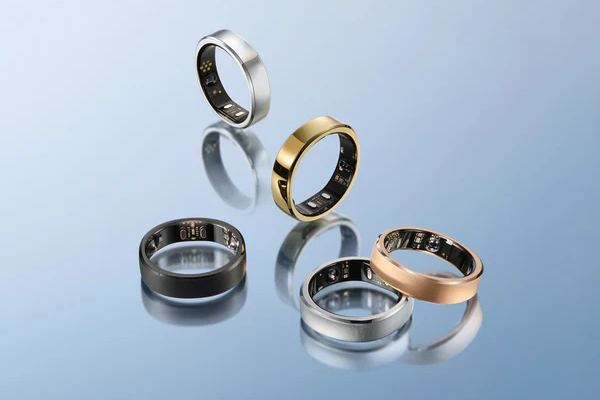
For instance, a hoop well being tracker may also help you observe supported patterns in exercise, sleep, coronary heart price, stress, and restoration over time.
A well being monitoring ring may present steady coronary heart price and HRV traits alongside supported nighttime vascular-health insights.
These measurements may also help you perceive longer-term patterns, however they shouldn’t be confused with a cardiovascular-age calculation.
RingConn doesn’t at present present a metric named “cardiovascular age.”
RingConn Gen 3 gives vascular well being pattern insights, together with in a single day vascular-load patterns and associated wellness context. That may be a totally different idea from a risk-model-based coronary heart age, an arterial-stiffness vascular age, or an imaging-derived cardiovascular age.
The excellence is necessary:
| Sort of Info | What It Can Inform You |
|---|---|
| Coronary heart price / HRV traits | Private cardiovascular and recovery-related wellness context over time |
| Exercise and sleep traits | Behavioral context related to long-term cardiovascular well being |
| Vascular well being pattern insights | Supported pattern data inside the RingConn system |
| Cardiovascular-age calculator | An age-equivalent output primarily based on a particular cardiovascular threat mannequin |
| Arterial or imaging evaluation | Medical structural or practical details about blood vessels |
In case you are selecting a wearable to know long-term wellness patterns, a finest well being tracker on your wants needs to be judged by what it truly measures, how constantly you may put on it, and whether or not you perceive what every metric does and doesn’t symbolize.
No client wearable age rating or wellness pattern ought to substitute blood stress checks, ldl cholesterol and glucose testing, acceptable medical cardiovascular-risk evaluation, or skilled medical care.
Use Cardiovascular Age With out Overreacting
Cardiovascular age will be helpful when it turns an summary threat estimate into one thing simpler to know.
Use this sequence:
Mannequin → Inputs → Reference → Estimate → Development → Medical Context
Mannequin: Which calculator or check generated the quantity?
Inputs: Did it use blood stress, ldl cholesterol, smoking, diabetes, imaging, arterial stiffness, or one thing else?
Reference: What kind of particular person or inhabitants is your outcome being in contrast with?
Estimate: Is that this a risk-equivalent age, structural vascular age, or one other kind of age mannequin?
Development: Are repeated outcomes altering as a result of actual cardiovascular threat elements modified?
Medical context: What do your precise blood stress, ldl cholesterol, glucose, medical historical past, household historical past, and different threat elements present?
The final step issues most.
A memorable age quantity could assist talk threat, however medical choices needs to be primarily based on validated threat evaluation, goal measurements, signs, medical historical past, {and professional} analysis—not the age analogy alone.
Steadily Requested Questions
What’s cardiovascular age?
Cardiovascular age is an age-like estimate used to explain cardiovascular threat or vascular situation in a extra intuitive means. Relying on the tactic, it might be calculated from conventional threat elements, arterial stiffness, vascular imaging, or different physiological information. It isn’t a universally standardized measurement.
Is cardiovascular age the identical as coronary heart age?
The phrases are sometimes used equally in client well being content material, particularly when referring to risk-factor-based calculators. Nonetheless, “vascular age” may confer with estimates derived from artery stiffness, imaging, or different vascular measurements. At all times examine how the particular quantity was calculated.
How is coronary heart age calculated?
Many heart-age calculators first estimate cardiovascular threat from elements akin to age, intercourse, blood stress, ldl cholesterol, smoking, and diabetes. They then calculate the age at which an individual with extra favorable reference threat elements would have an analogous estimated cardiovascular threat.
Why is my cardiovascular age older than my precise age?
In a risk-based mannequin, an older cardiovascular age typically means your present mixture of threat elements produces the next estimated cardiovascular threat than the reference profile on your chronological age. Components akin to hypertension, smoking, irregular ldl cholesterol, or diabetes could contribute relying on the calculator.
Can cardiovascular age be youthful than your actual age?
Sure. Some fashions can produce an age beneath chronological age when cardiovascular threat elements are significantly favorable. This needs to be interpreted as a positive model-based threat comparability, not proof that the bodily coronary heart or arteries are actually youthful than the remainder of the physique.
Can cardiovascular age change?
A risk-model-based cardiovascular age can change when the inputs change. Bettering blood stress, stopping smoking, enhancing ldl cholesterol, or managing different modifiable threat elements could decrease the calculated age. Structural vascular-age measurements could behave in another way and needs to be interpreted in accordance with the particular check.
Can a wise ring measure cardiovascular age?
A sensible ring can present supported cardiovascular and wellness traits akin to coronary heart price, HRV, sleep, exercise, and different device-specific insights. These measurements are usually not mechanically equal to cardiovascular age. RingConn doesn’t at present present a metric named cardiovascular age, and wearable traits shouldn’t be used as an alternative to medical cardiovascular-risk evaluation.
Closing Takeaway
Cardiovascular age could make cardiovascular threat simpler to know, however the quantity solely is sensible when you understand how it was created.
Some heart-age calculators translate conventional threat elements into an age equal. Different vascular-age strategies use arterial stiffness, ultrasound, imaging, vascular perform, or newer data-driven strategies.
Meaning:
There isn’t any single common cardiovascular-age measurement.
Don’t interpret a coronary heart age because the literal organic age of your coronary heart, and don’t examine ages from totally different fashions as in the event that they had been measuring precisely the identical factor.
Use:
Mannequin → Inputs → Reference → Estimate → Development → Medical Context.
Probably the most helpful data stays the underlying cardiovascular threat elements themselves: blood stress, ldl cholesterol, glucose regulation, smoking, bodily exercise, sleep, medical historical past, household historical past, and different clinically related measurements.
If an age estimate motivates you to enhance these elements, it may be a helpful communication instrument. The objective, nevertheless, shouldn’t be merely to make a rating youthful. The objective is to scale back actual cardiovascular threat.
Medical disclaimer: RingConn merchandise are meant for private well being and wellness consciousness and are usually not medical gadgets. RingConn doesn’t at present present a metric named cardiovascular age. Client wearable coronary heart price, HRV, vascular-health, sleep, exercise, and different wellness traits shouldn’t be used to diagnose heart problems or substitute validated medical cardiovascular-risk evaluation, blood stress measurement, laboratory testing, imaging, skilled medical recommendation, prognosis, or therapy. Search immediate medical take care of chest ache, important respiration issue, fainting, extreme dizziness or confusion, or quickly worsening signs.