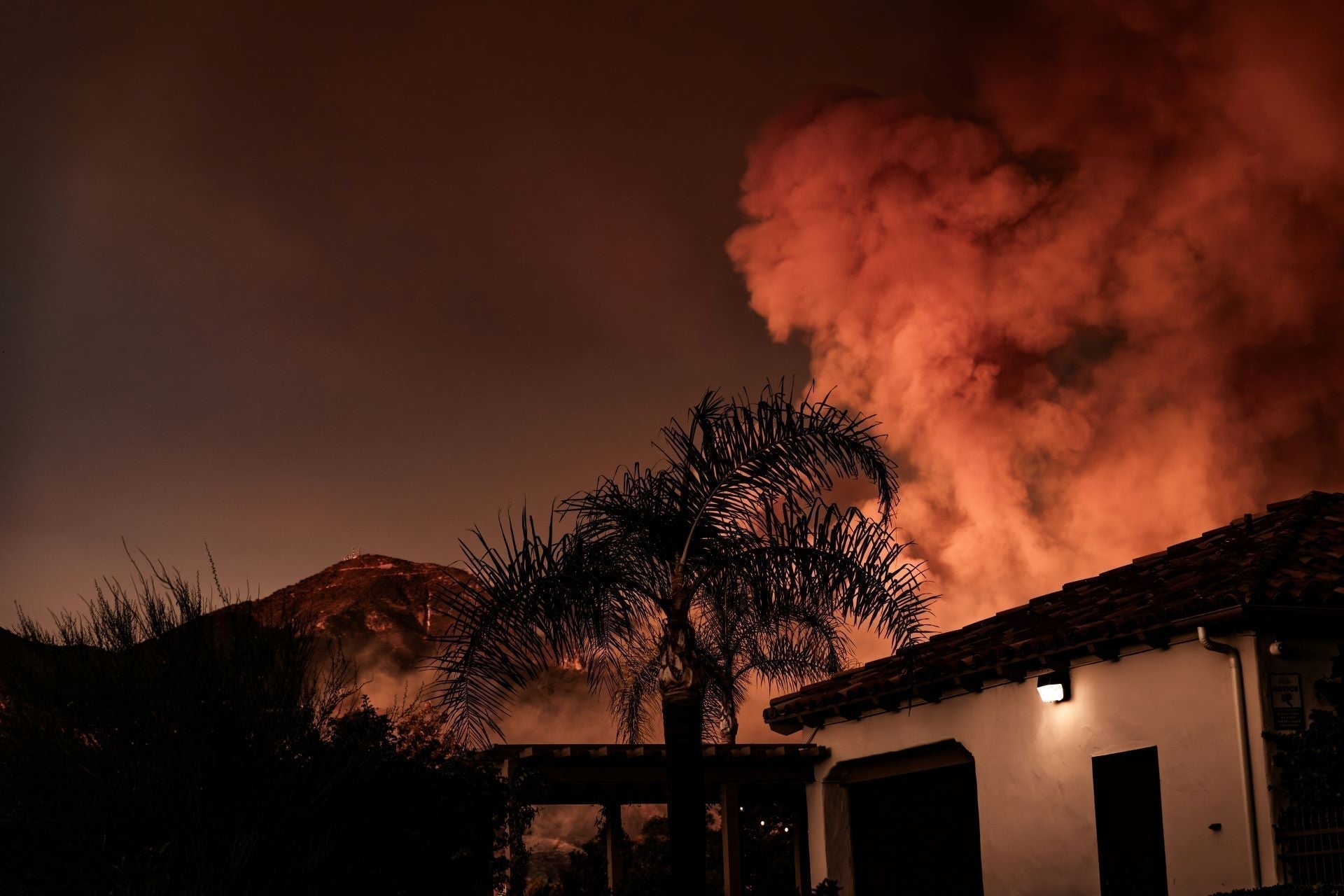


The 2026 Atlantic hurricane record is a near-replica of the hyperactive 2020 season, with one historic change: “Leah” has completely changed “Laura.” Retired after a devastating Class 4 landfall in Louisiana, Laura is a stark reminder that seasonal forecasts do not matter—localized readiness does. It solely takes a single storm to disrupt your life. Don’t wait till a hurricane is 48 hours away; the time to safe your house, backup energy, and insurance coverage is now.
- Understanding the 2026 Atlantic Hurricane Names Checklist
- How the Naming System Works
- The Official 2026 Atlantic Hurricane Names
- Overflow Guidelines: The Supplemental Checklist
- Off-Season Storm Guidelines
- NOAA’s 2026 Season Forecast: What the Numbers Imply
- How Hurricane Names Are Assigned and Retired
- Important Residence Energy Preparation for Hurricane Season
- Fuel Mills vs. Moveable Battery Stations
- Professional-Tricks to Maximize Battery Runtime Throughout a Outage
- Your Pre-Season Hurricane Guidelines
- Dependable Backup Energy Options for Your Residence
- Continuously Requested Questions
- What’s the distinction between a hurricane watch and a warning?
- Can I take advantage of a transportable generator indoors throughout a hurricane?
- Is flood insurance coverage required for my dwelling?
- What ought to I embrace in a hurricane emergency package?
- How can I shield my boat throughout a hurricane?
Understanding the 2026 Atlantic Hurricane Names Checklist
How the Naming System Works
The World Meteorological Group (WMO) manages a extremely structured naming system to maintain the general public knowledgeable and secure:
- The 6-Yr Rotation: The WMO maintains six rotating lists of 21 names. This implies the 2026 roster is scheduled to return once more in 2032.
- Skipped Letters: The letters Q, U, X, Y, and Z are skipped as a result of there will not be sufficient recognizable, culturally distinct names beginning with these letters.
- The 6-Yr Hole: This time-frame provides sufficient distance for retired names to fade from reminiscence whereas conserving the general system predictable.
- Retirement Steadiness: To keep away from exhausting out there names inside a decade, solely exceptionally damaging names are completely retired.
The Official 2026 Atlantic Hurricane Names
The 21 names designated for the 2026 season are:
- Arthur
- Bertha
- Cristobal
- Dolly
- Edouard
- Fay
- Gonzalo
- Hanna
- Isaias
- Josephine
- Kyle
- Leah (New: completely changed “Laura”)
- Marco
- Nana
- Omar
- Paulette
- Rene
- Sally
- Teddy
- Vicky
- Wilfred
Overflow Guidelines: The Supplemental Checklist
If a season is exceptionally energetic and generates greater than 21 named storms, the system adapts:
- The Supplemental Checklist: As an alternative of the outdated system, a newly established supplemental naming record will kick in, that includes customary names like Adria, Braylen, Caridad, and Deshawn.
- Retirement of the Greek Alphabet: The outdated Greek alphabet system (Alpha, Beta, Gamma) was completely retired after 2020. Related-sounding storm names like Eta and Theta created extreme translation and public security confusion in bilingual warning areas.
Off-Season Storm Guidelines
Atlantic hurricane season formally runs from June 1 to November 30. Programs that kind exterior of this window comply with strict calendar-driven guidelines:
- January Programs: If a storm kinds in January, it takes the following unused identify from the earlier season’s record.
- December Programs: If a storm kinds in December (after the official November 30 finish date), it pulls the primary identify from the upcoming season’s record.
NOAA’s 2026 Season Forecast: What the Numbers Imply
Early meteorological fashions point out {that a} quieter season is the most definitely end result for 2026. Nonetheless, coastal residents should stay vigilant.
2026 Chance Outlook
- Beneath-Regular Season: 55% likelihood (Most Probably)
- Close to-Regular Season: 35% likelihood
- Above-Regular Season: 10% likelihood
Predicted Seasonal Ranges (70% Confidence Interval)
- Named Storms: 8 to 14
- Hurricanes: 3 to six
- Main Hurricanes (Class 3 or stronger): 1 to three
The Local weather Drivers
- The El Niño Issue: The first driver behind this below-average forecast is the event of El Niño within the Pacific. Hotter Pacific waters strengthen vertical wind shear over the tropical Atlantic, tearing aside convective storm formations earlier than they will manage.
- The Counter-Drivers: Conversely, exceptionally heat Atlantic sea-surface temperatures and weaker commerce winds throughout the Caribbean can act as gasoline to counteract this wind shear. This implies peak exercise—occurring from mid-August via October—stays extremely unpredictable.
The “Andrew” Lesson: Deal with a below-average forecast as useful context, not as bodily safety. In 1992, the Atlantic produced solely seven named storms (a traditionally quiet 12 months). But, a kind of was Hurricane Andrew, which devastated South Florida as a Class 5. The chances do not matter when you find yourself the one boarding up home windows—put together your property as if a significant storm is assured to hit.
How Hurricane Names Are Assigned and Retired
The naming course of is a rigorously coordinated effort designed to make sure clear emergency communications.
The WMO Naming Course of
- Annual Evaluate: The World Meteorological Group (WMO) committee meets yearly to overview the earlier season and resolve on retirements.
- Retirement Standards: A reputation is retired if a storm is exceptionally lethal or pricey. This judgment name ensures that reusing the identify sooner or later wouldn’t be insensitive to survivors, and retains the historic report clear.
- Linguistic Conventions: Alternative names should match the linguistic conventions of the Atlantic basin, reflecting English, Spanish, French, and Dutch influences.
- Pronunciation Guides: The Nationwide Hurricane Heart (NHC) publishes official pronunciation guides so the media can talk clearly throughout emergency broadcasts.
Case Research: The Retirement of Laura (2020)
The choice to retire “Laura” and change her with “Leah” within the 2026 record was simple because of her immense affect:
- Depth: Class 4 landfall close to Cameron, Louisiana (150 mph winds, 18-foot storm surge).
- Injury: $19 billion in structural destruction.
- Casualties: 42 fatalities.
Important Residence Energy Preparation for Hurricane Season
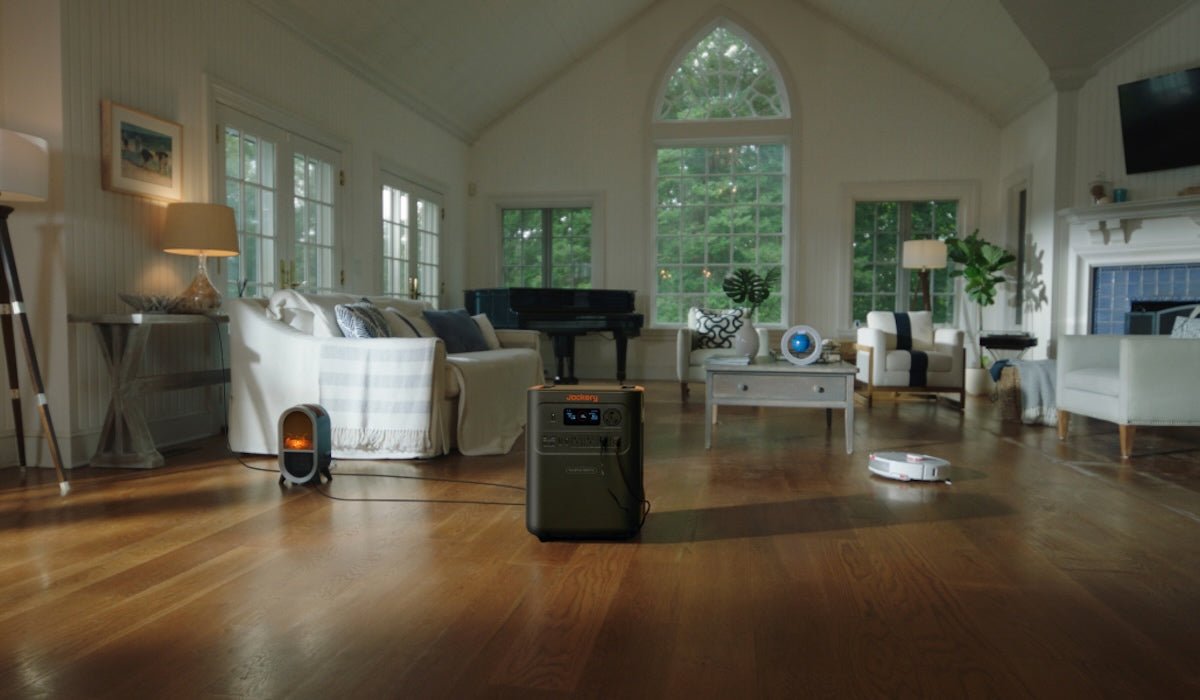
Trendy lithium battery banks are quickly changing conventional gasoline turbines as the usual alternative for residential backup energy.
Fuel Mills vs. Moveable Battery Stations
|
Characteristic |
Fuel Mills |
Moveable Battery Stations |
|
Security |
Excessive Threat: Should be saved 20+ toes away from the house to forestall lethal Carbon Monoxide (CO) poisoning. |
Indoor-Protected: Silent with zero emissions; could be operated safely inside your front room or bed room. |
|
Storm Usability |
Troublesome: Requires operating extension cords via open, wind-driven rain right into a operating gasoline engine. |
Straightforward: Stored indoors subsequent to your important units. |
|
Upkeep |
Excessive: Requires gasoline stabilizers, common engine runs, and fixed gasoline refueling logistics throughout outages. |
Low: Can sit idle for months with out degrading; recharges through wall retailers or photo voltaic panels. |
Professional-Tricks to Maximize Battery Runtime Throughout a Outage
In case you are counting on a transportable battery station throughout a blackout, use these methods to stretch your energy:
- Remove “Vampire Masses”: Disconnect idle tv screens, microwaves, and unused charging blocks. These draw fixed trickle energy.
- Use Good Energy Strips: Simply lower energy to total teams of non-essential electronics with a single swap.
- Prioritize Very important Gadgets: Maintain the battery reserved for communication (telephones, laptops), medical units, and low-draw LED lighting.
Your Pre-Season Hurricane Guidelines
Your preparation ought to start months earlier than a tropical watch is issued:
- Safe Emergency Energy: Check your house backup batteries, cost them to 100% capability, and confirm all of your AC and DC cabling.
- Mitigate Projectiles: Trim lifeless tree branches overhanging your roof, and safe out of doors objects (patio furnishings can change into a lethal missile in 74 mph winds).
- Confirm Flood Insurance coverage: Customary owners insurance coverage insurance policies explicitly exclude flood harm. A separate coverage below the Nationwide Flood Insurance coverage Program (NFIP) takes 30 days to activate, which means you can’t purchase it as soon as a storm enters the Gulf of Mexico. Roughly 25% of all flood insurance coverage claims come from properties exterior designated high-risk zones, making separate flood insurance policies extremely advisable.
- Doc Property: Take detailed photographs of each room and catalogue your beneficial possessions, saving these information to a safe cloud folder for insurance coverage adjusters. After a catastrophe, reminiscence alone is not going to suffice when itemizing losses.
For an in depth breakdown of storm preparation steps, learn our information on Methods to Put together for a Hurricane. To know coastal climate cycles, overview our evaluation of Hurricane Season within the US.
Dependable Backup Energy Options for Your Residence
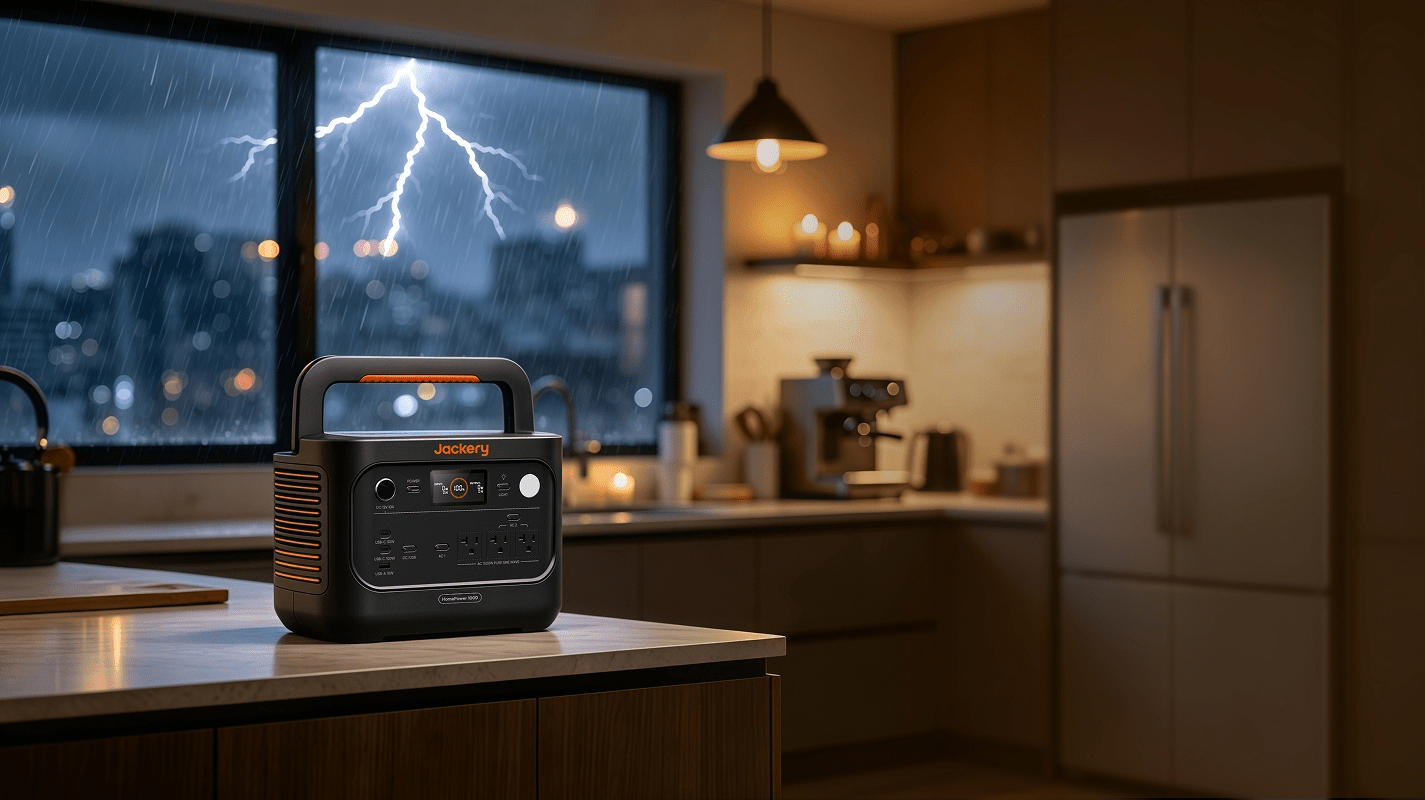
Emergency energy preparation is about conserving vital life-support circuits alive—resembling fridges, medical units, emergency lighting, and sump pumps—till grid energy could be restored. Three premium techniques from Jackery present splendid storm backup:
|
System Mannequin |
Base Capability |
Expandable To |
Key Runtime Instance |
|
Jackery HomePower 3600 Plus |
3,584 Wh |
43 kWh |
Runs a fridge (80W) for 38 hours |
|
Jackery Explorer 5000 Plus |
5,040 Wh |
60 kWh |
True 0ms UPS; runs sump pump (60W) for 40 hours |
|
Jackery Explorer 2000 v2 |
2,042 Wh |
N/A |
Powers emergency gentle (5W) for 155 hours |
For traditional properties, the Jackery Explorer 5000 Plus represents the gold customary for residential storm backup. It gives heavy-duty energy and seamless dwelling integration to maintain your family operating safely throughout prolonged outages.
Key Options & Technical Specs:
- Excessive Energy Output: Delivers 7,200W of steady output (with a 14,400W surge capability) to run a number of heavy-draw home equipment concurrently with out overloading.
- Important Load Help: Simply handles high-demand gear, together with water pumps, central HVAC followers, and full-sized fridges.
- Seamless Energy Backup (0ms UPS): When built-in with your house’s breaker panel through a switch swap, the system achieves a 0ms switch time. Your vital home equipment keep on-line throughout a blackout with no single flicker.
- Large Expandability: The system is totally expandable as much as an excellent 60 kWh, permitting you to maintain vital medical gear and residential masses via prolonged, multi-day grid failures.
To calculate your house’s complete emergency electrical calls for, try our Important Residence Backup Energy Information.
Continuously Requested Questions
What’s the distinction between a hurricane watch and a warning?
A hurricane watch signifies that sustained winds of 74 mph or larger are doable in your space inside 48 hours—it is best to start boarding up home windows, testing your emergency energy techniques, and monitoring native climate updates. A hurricane warning signifies that hurricane-force winds are anticipated inside 36 hours—you could full your storm preparations and evacuate instantly if suggested by native officers.
Can I take advantage of a transportable generator indoors throughout a hurricane?
No. Conventional gasoline or diesel turbines must not ever be operated indoors because of excessive, deadly carbon monoxide poisoning dangers. Nonetheless, battery-powered photo voltaic turbines don’t combust fuels, run silently, and are utterly secure to function indoors proper subsequent to your home equipment throughout a storm.
Is flood insurance coverage required for my dwelling?
Flood insurance coverage is simply federally mandated you probably have a mortgage and stay in a chosen high-risk flood zone. Nonetheless, customary owners insurance policies explicitly exclude flood harm, and roughly 25% of all flood insurance coverage claims come from properties exterior designated high-risk zones, making separate flood insurance policies extremely advisable.
What ought to I embrace in a hurricane emergency package?
Your emergency package ought to include at the very least one gallon of ingesting water per particular person per day for 3 days, non-perishable canned meals, a guide can opener, flashlights, spare batteries, first-aid medical provides, fundamental hand instruments, private medicines, and a safe waterproof folder holding your house stock photographs and paperwork.
How can I shield my boat throughout a hurricane?
If doable, pull your boat out of the water and trailer it to a safe inland storage facility. In case your boat should stay in a marina slip, double up all dock traces with chafe-protection guards, clear all free canvas and sails to scale back wind resistance, seal all hatches, and disconnect your starter batteries. By no means stay aboard your vessel throughout a storm.