

Kurzantwort: A compressor moveable fridge cools to 0°F even in 100°F warmth, whereas a thermoelectric cooler solely drops ~40°F under ambient — ineffective for preserving meals protected in summer time. For a pair’s weekend, select 35–45L; a household of 4 wants 55–65L. Off‑grid, a 60W fridge attracts 420–600 Wh each day, so pair it with a conveyable energy station just like the Jackery Explorer 2000 v2 and a 200W photo voltaic setup to run indefinitely with out draining your automobile battery.
- How do compressor and thermoelectric moveable fridges examine?
- What measurement moveable fridge do I want for tenting?
- What options matter most in a conveyable fridge?
- How do I energy a conveyable fridge off‑grid?
- Ought to I get a single‑zone or twin‑zone moveable fridge?
- How do I maximize runtime and effectivity with my moveable fridge?
- Limitations / What to Know Earlier than Shopping for
- Product Advice: Jackery Transportable Energy Options
- Often Requested Questions (FAQ)
Das Wichtigste auf einen Blick:
- Compressor fridges are the one protected alternative for tenting in scorching climate — thermoelectric items can’t maintain meals under 40°F as soon as the skin temperature passes 80°F.
- A 35–45L unit serves two individuals for a weekend; households want 55–65L for 3–5 days with recent and frozen objects.
- Day by day energy draw for a 40–60L fridge is 420–600 Wh (35–50 Ah at 12V), so an influence station with at the very least 1.5× that capability covers cloudy days.
- Twin-zone fridges provide you with a freezer and fridge however sacrifice 15–20% of usable house; single-zone maximizes capability if you solely want one temperature.
- Pre‑chill your meals and hold the fridge out of direct solar — these two habits reduce power consumption by 15–30%, stretching your battery runtime.
How do compressor and thermoelectric moveable fridges examine?
Compressor fridges actively pump warmth out and keep 0°F inside even at 100°F outdoors, whereas thermoelectric coolers can solely create a set ~40°F temperature distinction under ambient — making them unsafe for meals on scorching days.
|
Characteristic |
Compressor Fridge |
Thermoelectric Cooler |
|
Cooling know-how |
Motor‑pushed refrigerant cycle (like a kitchen fridge) |
Peltier chip (stable‑state warmth pump) |
|
Temperature management |
Can freeze (0°F) and keep any set level; protected at 100°F outdoors |
~40°F under ambient; at 90°F outdoors inside ≈50°F (bacterial hazard zone); unsafe in a single day or for uncooked meals |
|
Energy consumption (12V DC) |
35–50 Ah/day (420–600 Wh); cycles on/off, environment friendly |
4–8 A constantly (96–192 Ah/day); delivers weaker cooling |
|
Effectivity |
Way more environment friendly per diploma of cooling |
Much less environment friendly total |
|
Meals security & storage |
Protected for days; can freeze meat, retailer dairy, hold greens crisp |
Solely protected for pre‑chilled drinks on a day journey |
|
Greatest software |
Tenting, journey, multi‑break day‑grid |
Tailgate events, brief journeys |
For tenting and journey, compressor fridges are the one sensible alternative. Thermoelectric coolers belong at a tailgate celebration, not a multi‑day journey.
What measurement moveable fridge do I want for tenting?
Dimension depends upon three issues: how many individuals, what number of days, and whether or not you want a freezer.
- Solo camper, 2–3 days: 15–25L. Sufficient for drinks, sandwiches, and some snacks. No frozen objects.
- Couple, weekend journey: 35–45L. Matches recent produce, dairy, drinks, and a small frozen part for meat or ice cream.
- Household of three–4, 3–5 days: 55–65L. Holds lunch meat, leftovers, frozen meals, and drinks for an entire journey with out resupply.
- Massive teams or week‑lengthy expeditions: 75L+. Bear in mind that bigger items eat extra energy and eat up car cargo house.
Inner dimensions matter as a lot as whole quantity. Test that the inside top matches a 2‑liter soda bottle standing upright (usually 10–12 inches) or a gallon jug. Some 40L fridges have awkwardly shallow baskets that drive you to put bottles flat, losing house.
A sensible rule: should you’re uncertain between two sizes, go one measurement up. A barely bigger fridge working half‑empty makes use of solely marginally extra energy than a stuffed smaller one, however you received’t run out of chilly storage.
What options matter most in a conveyable fridge?
Not all compressor fridges are constructed equal. Three options separate a dependable unit from a battery‑draining disappointment.
- Compressor high quality and management logic: The compressor is the guts of the unit. Search for a mannequin with a confirmed compressor model and a wise thermostat that modulates velocity as an alternative of merely banging on/off. A variable‑velocity compressor reduces energy spikes and runs quieter — 30–45 dB at evening, concerning the quantity of a quiet dialog.
- Insulation thickness: Thick, dense insulation retains chilly in and cuts compressor runtime. Low-cost fridges use skinny partitions; they cycle extra usually and lose chilly air sooner if you open the lid. Test the wall thickness within the specs — 50 mm or extra is an efficient signal.
- Chest‑model type issue: Chilly air sinks. While you open a chest‑model fridge, the chilly air stays within the field. A vertical or entrance‑opening unit dumps its chilly air each time you open the door, forcing the compressor to work more durable. For campsite use the place you’re out and in all day, a chest is much extra environment friendly.
- Lid design: Versatile lids that open from both facet or are absolutely detachable make entry simpler in a packed car. A latch that seals firmly however doesn’t require two arms is a small element that issues each time you attain for a drink.
- Guarantee: A 5‑yr compressor guarantee indicators the producer expects the unit to final. Price range fashions usually supply only one–2 years.
How do I energy a conveyable fridge off‑grid?
A compressor fridge wants regular 12V DC energy. You’ve gotten three practical choices.
- 12V DC out of your car battery: This works whereas driving, however it’s dangerous when parked. A fridge can drain a starter battery under the voltage wanted to crank the engine. Set up a low‑voltage cutoff or, higher, use a conveyable energy station as a buffer.
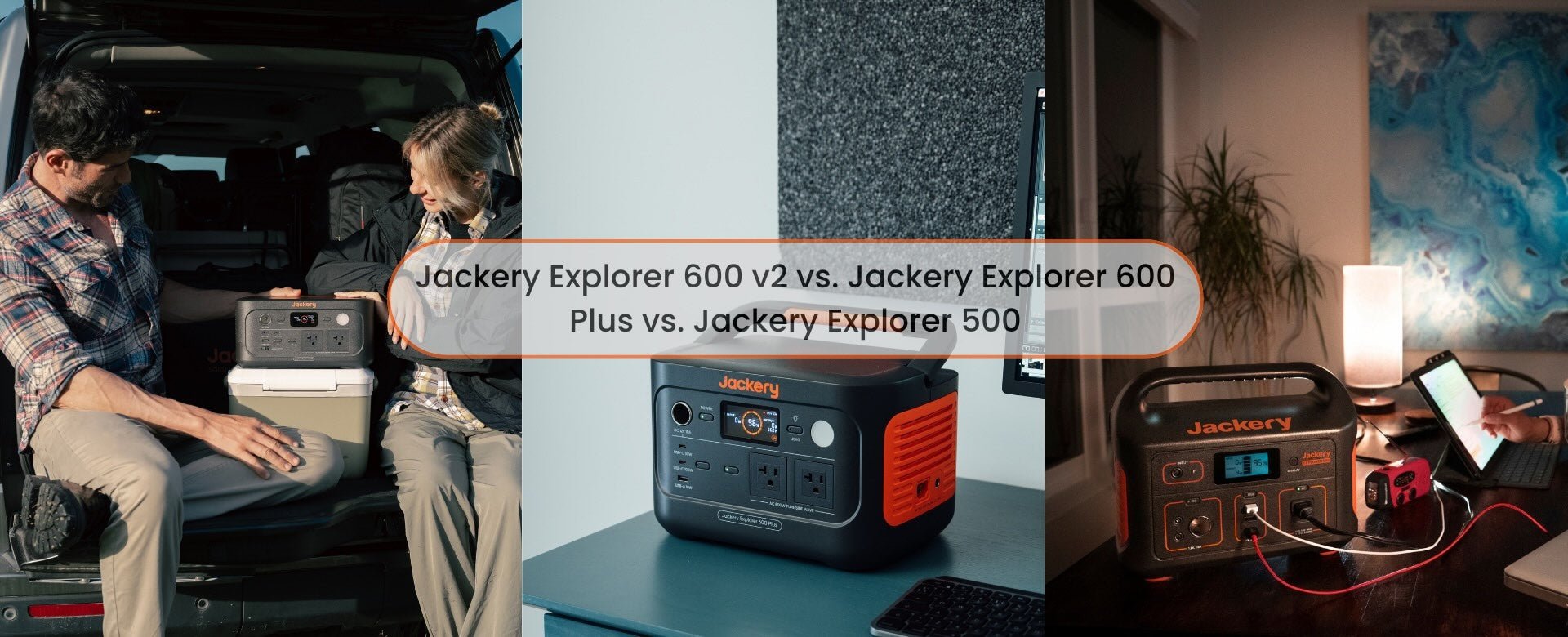
- Transportable energy station: A lithium‑iron‑phosphate (LiFePO4) energy station just like the Jackery Explorer 2000 v2 or Jackery Explorer 1000 v2 gives clear, regulated 12V DC output and sufficient capability to run a fridge for days with out touching your automobile battery. The Explorer 2000 v2 holds 2,042 Wh — that’s 3–5 days of runtime for a 60W fridge, relying on ambient temperature. The Explorer 1000 v2, with 1,070 Wh, covers a weekend for a 40–50L unit.
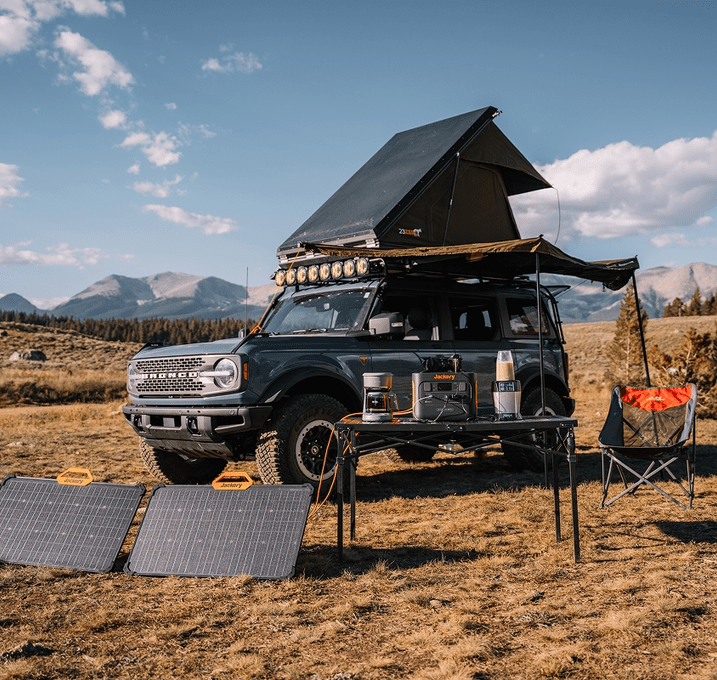
- Photo voltaic recharging: Pair an influence station with a 200W photo voltaic setup, and you may run the fridge indefinitely. In full solar, a 200W panel array delivers about 800–1,200 Wh per day, matching or exceeding the fridge’s each day consumption. The photo voltaic generator setup — energy station plus panels — turns into a self‑sustaining off‑grid cooling system.
Battery capability rule: Your energy station ought to have at the very least 1.5× the fridge’s each day Wh draw. This covers cloudy days, larger‑than‑anticipated consumption in warmth, and the truth that you shouldn’t discharge a battery to zero. For a 500 Wh each day draw, goal at the very least 750 Wh of usable capability. When doubtful, calculate your actual wants earlier than shopping for.
Ought to I get a single‑zone or twin‑zone moveable fridge?
The selection comes down as to if you want a freezer.
Single‑zone fashions dedicate the complete inside quantity to 1 temperature. They maximize storage for all‑chilly or all‑frozen objects. Should you solely want drinks, deli meat, and greens at 36°F, a single‑zone 45L unit offers you a full 45L of usable house.
Twin‑zone fridges cut up the inside into two compartments with unbiased temperature management — usually a freezer (0°F–10°F) and a fridge (34°F–40°F). They allow you to carry ice cream and recent lettuce in the identical field. The commerce‑off: the divider and separate evaporators eat about 15–20% of the overall quantity. A 60L twin‑zone fridge successfully shops round 50L of meals.
|
Use Case |
Beneficial Zone Kind |
Instance Dimension |
|
Weekend couple journey, solely chilly drinks and snacks |
Single‑zone |
35–45L |
|
Household journey with frozen meat and recent produce |
Twin‑zone |
55–65L |
|
Seashore weekend with ice cream and chilled drinks |
Twin‑zone |
45–55L |
|
Most capability in a small car, no freezer wanted |
Single‑zone |
50–60L |
|
Lengthy‑time period overlanding requiring each frozen and recent |
Twin‑zone |
75L+ |
Twin‑zone wins if you want a freezer. Single‑zone wins if you don’t — you get extra usable house for a similar exterior footprint and an easier, usually extra dependable, system.
How do I maximize runtime and effectivity with my moveable fridge?
Small habits reduce power consumption by 15–30%. That’s the distinction between a lifeless battery on day three and chilly meals on day 5.
- Pre‑cool every part earlier than loading: Placing heat drinks or room‑temperature meat into the fridge forces the compressor to run non‑cease for hours. Chill meals in your house fridge in a single day, then switch it to the moveable unit proper earlier than departure. The compressor solely has to take care of temperature, not combat thermal mass.
- Set the thermostat to 36–38°F, not max chilly: Each 5°F decrease inside temperature will increase power consumption by roughly 15–20%. You don’t want 28°F for recent meals; 36–38°F retains every part protected and makes use of noticeably much less energy.
- Decrease lid opens: Every time you open the lid, chilly air spills out and heat air rushes in. The compressor then runs a full cycle to get well — including 2–5 Wh per open. Manage the inside so you possibly can seize what you want in seconds, not minutes. Use baskets or dividers to separate frequent‑entry objects.
- Park in shade and insulate the fridge: Direct solar on the fridge physique raises the interior temperature dramatically. A fridge in full solar can draw 50% extra energy than one in shade. Use a reflective cowl or just transfer the unit to the shaded facet of your car.
- Monitor actual‑time energy draw: The Jackery Explorer 2000 v2 and Explorer 1000 v2 show stay wattage. Test the show a number of occasions in your first journey to know how your fridge behaves in several circumstances. You’ll shortly study which habits waste power and which reserve it.
Limitations / What to Know Earlier than Shopping for
Even a great moveable fridge has commerce‑offs. Know them earlier than you spend $400–$1,200.
- Construct high quality varies broadly: Price range fridges usually use thinner insulation and cheaper compressors. They draw extra energy, run louder, and fail earlier. A $300 unit may cost a little you extra in further battery capability and alternative than a $700 unit that lasts 10 years.
- Chest‑model is extra environment friendly, however more durable to arrange: Chest fridges are the precise alternative for power effectivity, however they require digging to achieve objects on the backside. Vertical fridges supply simpler entry however lose chilly air with each door open. For frequent entry at a campsite, a chest with inside baskets is one of the best compromise.
- Energy consumption spikes in scorching climate: A fridge rated at 500 Wh/day in 70°F ambient could draw 750 Wh/day in 100°F warmth. Dimension your battery for the worst case, not the common. And by no means place the fridge in direct solar — that’s the quickest solution to kill your battery.
- Pest intrusion is an actual downside: Unsealed holes in RV flooring or trailer vents let rodents chew by means of fridge wiring. Examine and seal all gaps earlier than set up. A $10 tube of sealant can forestall a $300 restore.
- Not excellent for heavy freezing: Most moveable fridges have a small freezer compartment that holds a number of kilos of meat. If you have to freeze every week’s value of meals, contemplate a devoted moveable freezer or a big twin‑zone unit — and anticipate it to attract 800–1,200 Wh per day.
Product Advice: Jackery Transportable Energy Options
A compressor fridge is just nearly as good as the facility behind it. Jackery’s Explorer energy stations and SolarSaga panels are constructed to maintain your meals chilly for days with out a generator or shore energy.
Standards for a fridge energy station: match battery capability to each day fridge draw, guarantee 12V DC output, and plan for photo voltaic recharging on prolonged journeys. For a 60W fridge drawing 500 Wh/day, you need at the very least 750 Wh of capability and a photo voltaic panel that may replenish that quantity in a number of hours of solar.
Splendid for: campers, RVers, and overlanders who want dependable off‑grid energy for a compressor fridge with out draining a car battery.
Not excellent for: customers needing important dwelling backup for a number of giant home equipment, or these with 12V fridge programs drawing over 100W constantly — in that case, a bigger stationary system is extra acceptable. Discover ways to measurement a house backup system individually.
|
Product Bundle |
Greatest For |
Key Specs |
|
Jackery Photo voltaic Generator 1000 v2 (Explorer 1000 v2 + 2x SolarSaga 100W) |
Weekend tenting with a 35–45L fridge |
1,070 Wh capability, 1,500W AC output, 12V DC port, 200W photo voltaic enter (2x 100W panels); recharges in ~8 hours of solar with included panels, or ~4 hours with 4x 100W |
|
Jackery Photo voltaic Generator 2000 v2 (Explorer 2000 v2 + 2x SolarSaga 100W) |
5‑day journeys or bigger 55–65L fridges |
2,042 Wh capability, 2,200W AC output, 12V DC port, helps as much as 400W photo voltaic; recharges in 7.5 hours with 4x 100W panels; runs a 60W fridge for 30+ hours with out solar |
Each bundles embrace a number of output ports — 12V DC for direct fridge connection, USB‑C for telephones, and AC for different gear. The LiFePO4 batteries ship 4,000+ cycles to 70%+, in order that they’ll outlast a number of fridges. And since the facility station exhibits actual‑time watt draw, you possibly can see precisely how a lot power your fridge makes use of and alter your habits accordingly. For anybody critical about off‑grid cooling, matching the precise capability to your hundreds is the one most vital choice.
Often Requested Questions (FAQ)
How noisy are compressor moveable fridges at evening?
Most compressor fridges run at 30–45 decibels, concerning the quantity of a quiet dialog. You’ll be able to sleep subsequent to 1 in a tent with out earplugs.
Do moveable fridges work at excessive altitudes?
Sure, compressor fridges operate usually as much as at the very least 10,000 ft. The sealed refrigerant system isn’t affected by decrease air strain.
What’s the finest placement for a conveyable fridge in a car?
Place it on a flat floor in a shaded, properly‑ventilated space, away from exhaust warmth. Go away at the very least 2–3 inches of clearance across the compressor vents for airflow.
Can I run a conveyable fridge straight from a photo voltaic panel?
No. Photo voltaic output fluctuates with daylight, and fridges want regular 12V DC. You need to have a battery or energy station between the panel and the fridge.
How a lot do typical 50L moveable fridges weigh?
A 50L compressor fridge weighs 35–50 kilos empty. Plan for 2‑individual lifting and safe tie‑downs in your car.